
Whose Heritage Gets Heard? The Power of Storytelling in Preserving South Africa’s Diverse Voices
By 1Africa Consulting
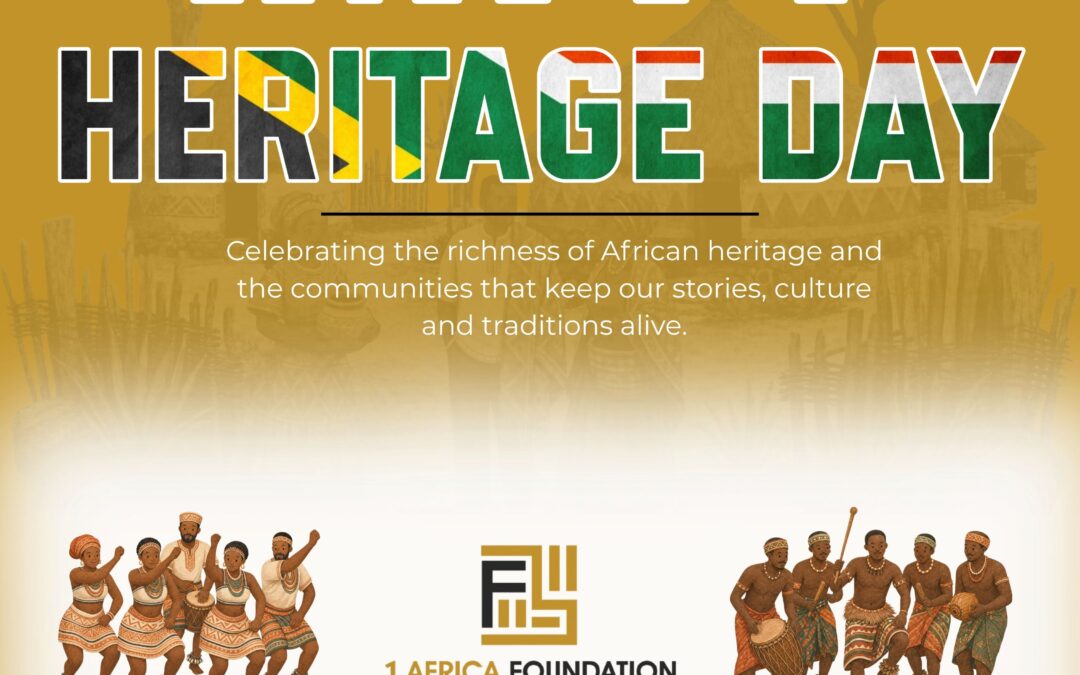
Heritage Day gives South Africans an opportunity to celebrate the cultures, languages, traditions and histories that make our country unique. But beyond the celebrations, we should ask a more important question: whose heritage gets heard?
South Africa’s heritage is not limited to food, clothing, music or cultural traditions. It is also found in the stories of communities, local entrepreneurs, young people, traditional knowledge holders, women, artists and community leaders whose experiences form part of the country’s collective identity.
Yet many of these stories remain outside mainstream conversations.
This is where storytelling matters.
For organisations, Heritage Day should be more than an annual opportunity to acknowledge diversity. It should be an opportunity to consider how they use communication to give visibility to the people and communities they serve.
Authentic representation starts with listening.
Organisations should ask: Who are we speaking about? Who is telling the story? Whose perspective is missing? And are we representing people accurately and respectfully?
There is a significant difference between telling stories about communities and creating opportunities for communities to tell their own stories.
Public relations and strategic communication play an important role in closing this gap. Through media relations, thought leadership, podcasts, community profiles, digital platforms and stakeholder engagement, organisations can create spaces for voices that are often overlooked.
This is particularly important for young people. As digital platforms increasingly shape how history, identity and culture are understood, young South Africans have an opportunity to document their communities and preserve stories in ways that future generations can access.
However, representation must not become tokenism. Featuring someone simply to demonstrate diversity does little to create meaningful inclusion. Their voice must have relevance, their experience must be respected, and their contribution must form part of a broader commitment to understanding the communities an organisation engages with.
For businesses, this is also a matter of credibility. Audiences increasingly want to know whether organisations understand the people they communicate with, rather than simply using cultural moments to promote themselves.
Heritage therefore belongs in the ongoing conversation about how organisations communicate, build relationships and contribute to society.
This Heritage Day, the challenge for organisations is to look beyond the celebration and listen more closely to the stories around them.
Who is being heard? Who is still missing? And what can we do to ensure that South Africa’s many voices are not only celebrated, but preserved and carried forward?
Because when authentic stories are given a platform, we do more than communicate. We preserve memory, strengthen understanding, and ensure that every generation has a voice in shaping the story of South Africa.